Summary
A remodel left me with lights over two fireplace benches wired to separate switches, so turning them on meant a walk to both ends of the room. Rather than tear open the wall, I let Home Assistant and a pair of Inovelli switches make the two behave as one. The wiring doesn’t have to change if software controls the switches.
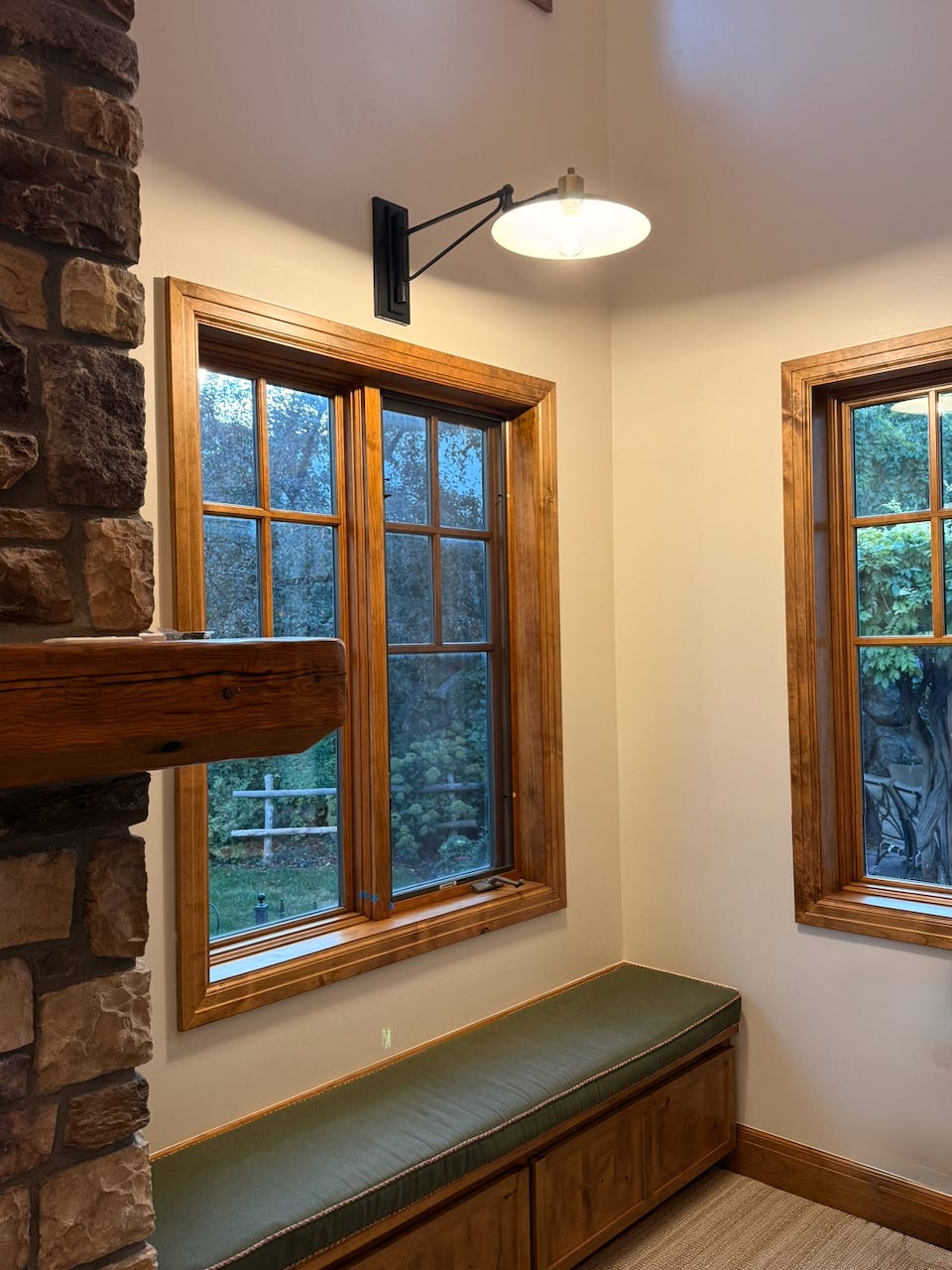
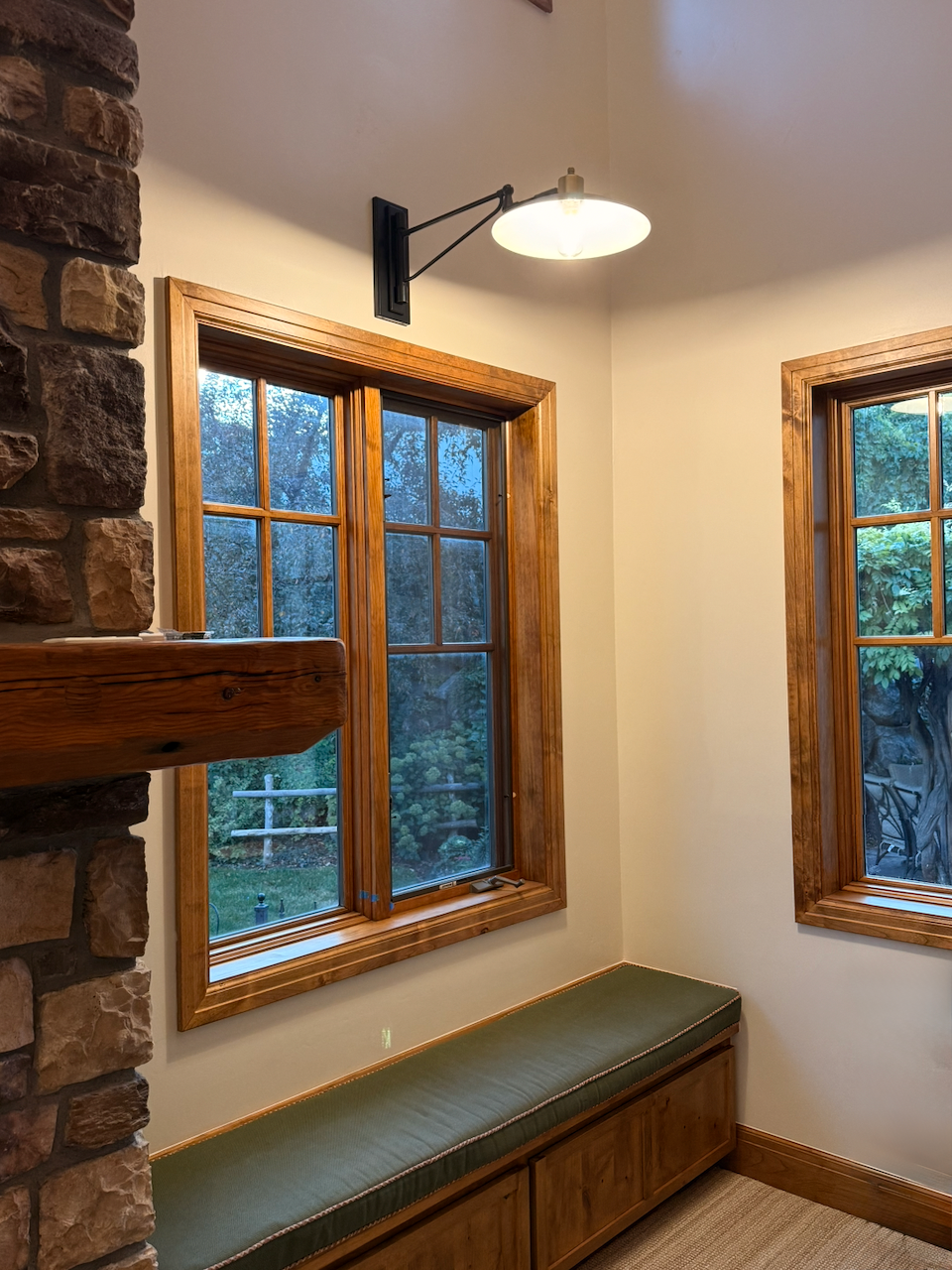
As part of our remodel, Lynne wanted lights over the built-in benches on either side of our fireplace. The fireplace itself made it hard to run both fixtures back to a single switch, so the easy path left us with one switch at each end of the hearth. That works, but it means anyone who wants the benches lit has to cross the room and flip two switches. It’s a small annoyance, the first-world that the physical world imposes from time to time. Fortunately, software can fix it.
Both switches are Inovelli Blue Series 2-1 dimmers, Zigbee devices that report their state and take commands over the network as readily as a person flips them by hand. That makes them programmable in a way an ordinary switch is not; the paddle still does the obvious thing, but the switch is also something software can watch and control. I’ve leaned on that elsewhere in the house. One of them runs the bathroom fan, turning it on by itself when the humidity spikes and off again once the room dries out, so nobody has to remember.
The fix for the benches uses the same idea. Each light keeps its own switch, and a pair of Home Assistant automations wires the two together in software: when one switch turns on, it turns on the other, and the same for off. Flip either paddle and both fixtures respond, which is exactly how a three-way switch behaves when it controls a single light. Here there are two lights and two circuits that never meet in the wall, made to act as one from the automation layer instead.
And nothing about this arrangement is fixed, either. The same two switches could join a scene that dims the whole room for a movie, answer a voice command, or turn themselves off when the house goes to bed, none of which requires a visit from an electrician. Because the coordination lives in software rather than in the wiring, teaching the switches a new behavior simply requires writing another automation, not running another wire. The pairing I set up today is just the first thing I have asked them to do.
The wires in the wall didn’t change; the behavior did. That’s the beauty of adding a little software to a physical control: the constraints of the wiring are no longer the constraints of the room. When the layout fights you, you don’t always have to open the wall. Sometimes you can just change what the switches do.
Photo Credit: Lights over the fireplace benches from Phil Windley (CC BY 4.0)